
DePIN tokens launched between 2018 and 2022 were down 94 to 99 percent from their all-time highs by early 2026. Yet the category’s leading networks were posting verifiable recurring revenue. Helium’s token fell 77 percent in 2025, while the network’s on-chain revenue rose about eightfold. Both stories come from the same Messari report.
What is DePIN, then? The usual answer, “blockchain plus hardware,” explains none of that. It can’t tell you why one network earns from customers, while the next pays its contributors in new tokens alone.
If you are planning a DePIN network or node sale, or sizing the sector for a fund, that difference is what you are pricing.
This Surgence Labs guide covers how DePIN works, the five network types, the revenue gap in the data, and what the SEC has said. Then it turns to selling nodes to the people who will run them, the part of a Web3 go-to-market plan that most explainers skip.
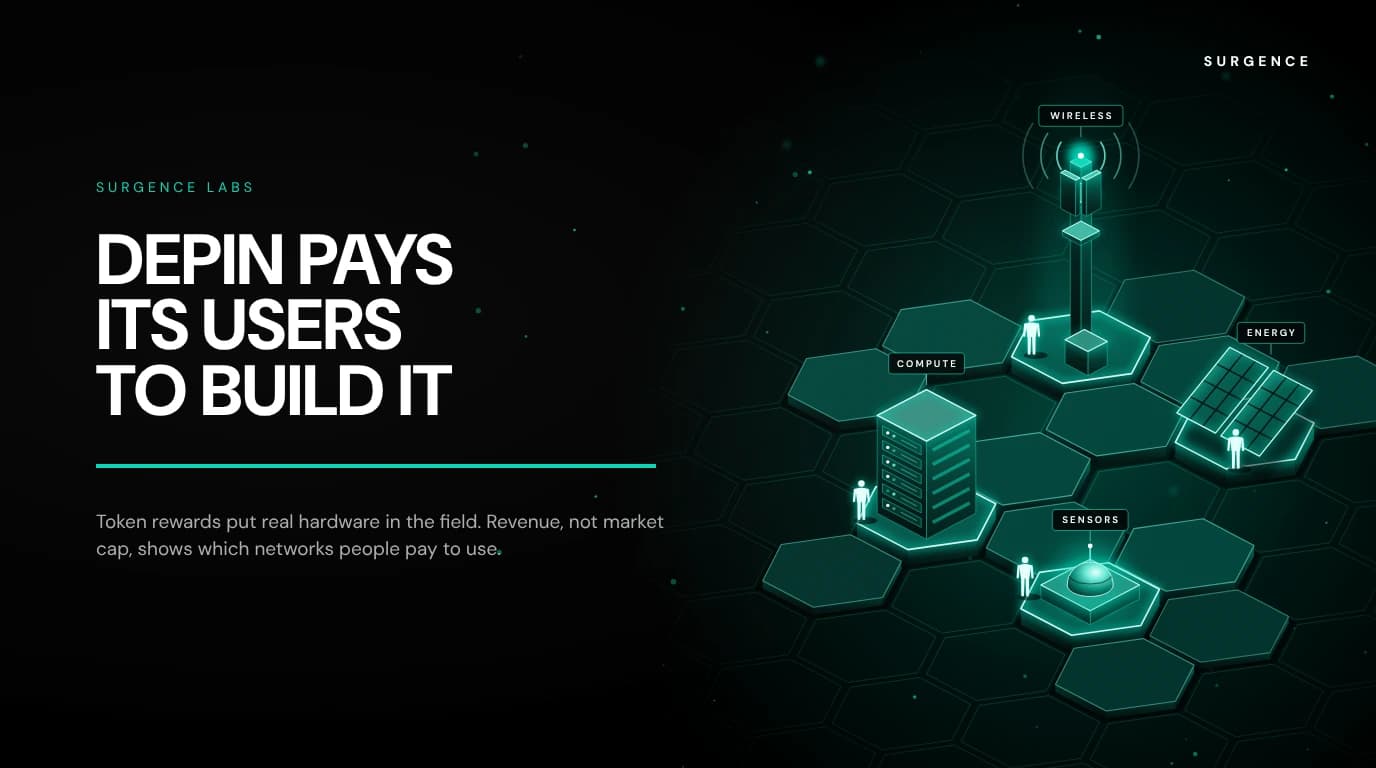
DePIN, short for decentralized physical infrastructure networks, is the category of crypto networks that pay people in tokens to deploy, operate, and verify real-world hardware that others can then use. It is infrastructure built by its contributors, not infrastructure tokenized after the fact. Decentralized means that no single company owns the hotspots, dashcams, or GPUs. Physical means that the work happens in the world, like coverage on a street or a rendered frame. Infrastructure means that a carrier, a mapmaker, or an AI team is supposed to pay for the output. Tokens pay for supply before customers show up, and customer revenue then has to replace those token rewards. Supply is the easy half.