

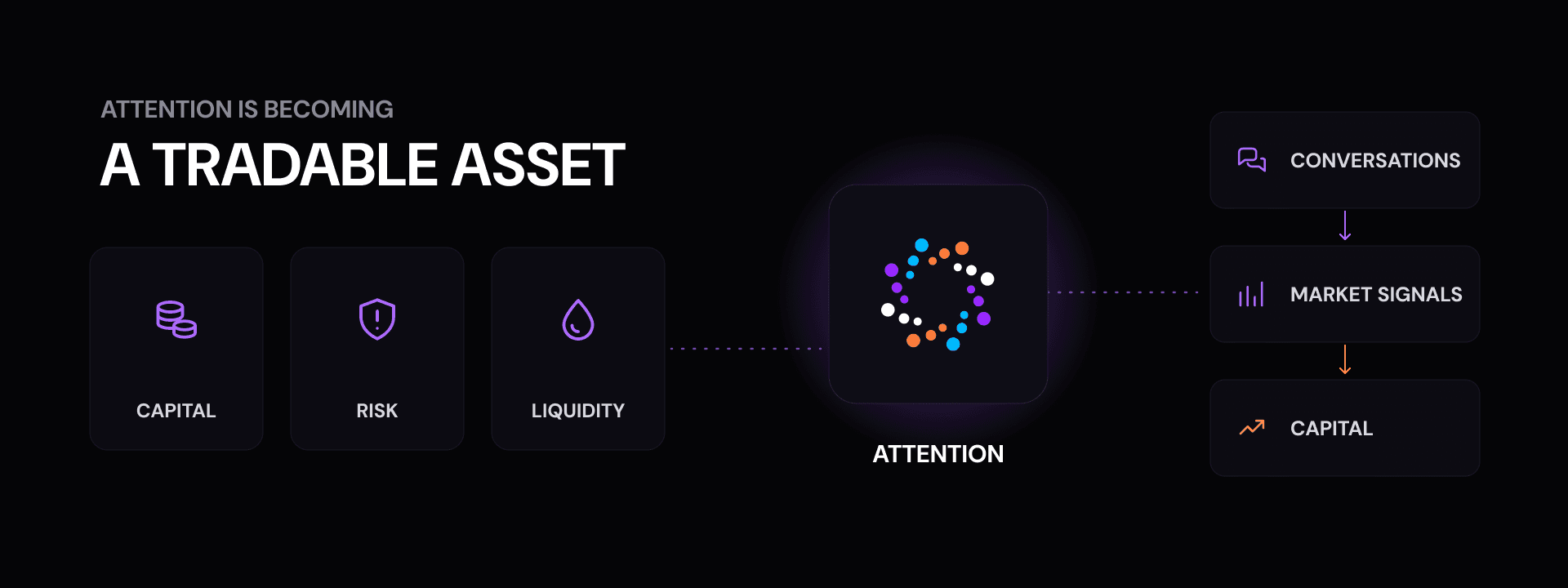
Markets used to reward whoever had information first.
Today, information is abundant. The real advantage lies in identifying which conversations are shaping narratives, attracting conviction, and influencing capital allocation before the broader market notices. This shift sits at the center of attention markets, where mindshare is evolving from a cultural signal into a tradable market input.
The effects are already visible across modern markets. Entire sectors emerge around narratives. Memecoins attract billions in liquidity. Prediction markets respond to shifts in public sentiment before traditional media catches up. Communities form around ideas long before institutional capital arrives.
The common thread across these developments is attention.
Yet not all attention carries the same significance. Attention may create awareness, but awareness alone rarely moves markets. Mindshare emerges when a topic sustains discussion and captures a growing share of attention within a community. Conviction follows when participants begin acting on that narrative rather than simply talking about it. Many signals attract attention and quickly fade, while others progress through these stages and ultimately influence market behavior.
The analytical challenge is understanding where a signal sits within that progression. Historically, these shifts were difficult to observe. Investors relied on headlines, analyst commentary, and consumer surveys as indirect proxies for public interest, making it difficult to distinguish fleeting attention from signals capable of influencing market behavior.