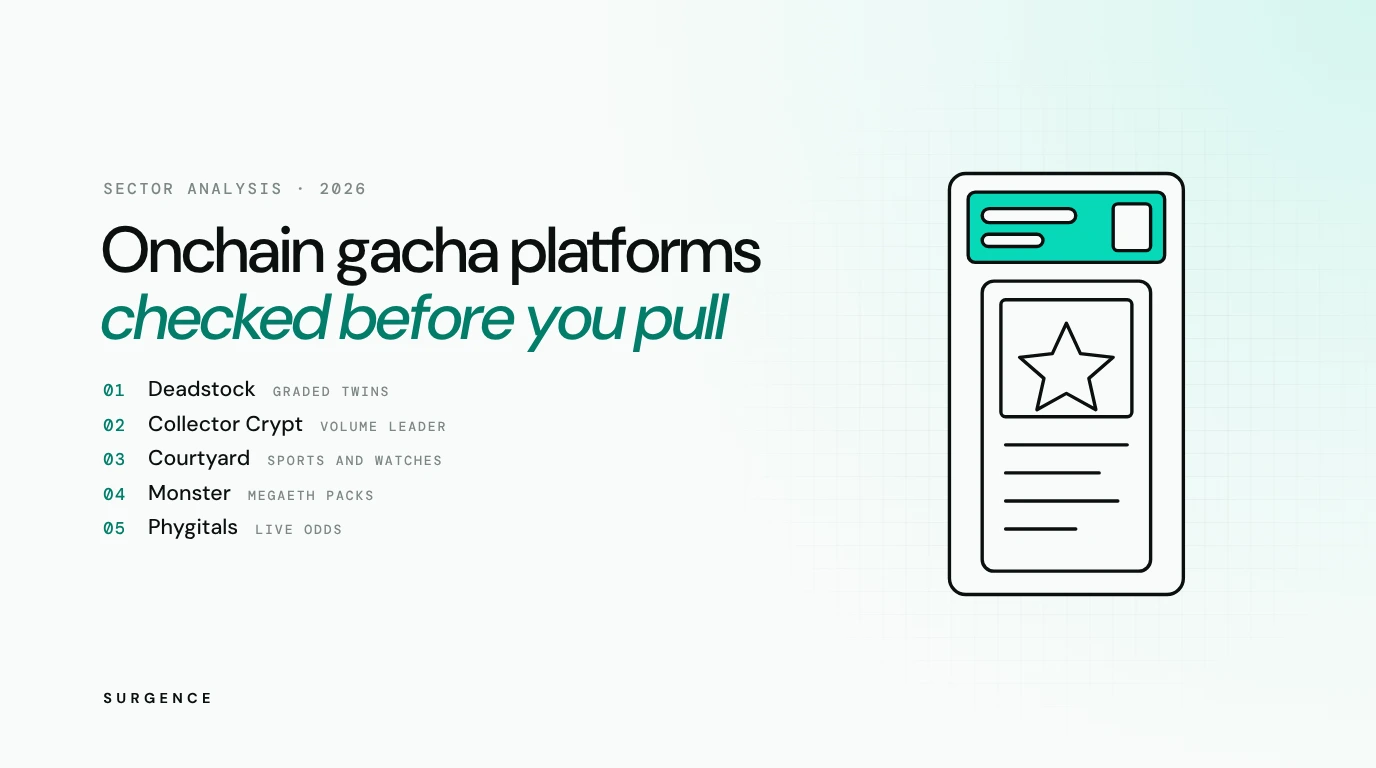

Onchain card packs grossed $284.3 million in July 2026, per Blockworks Research.
In the same year, the average NFT sale fell to about $75, down from $96 in 2025, per CryptoSlam data compiled by FindWeb3. Blur is retiring its website on 12 November, and Magic Eden quit Bitcoin and EVM NFTs in February to focus on Solana.
Both facts describe one market.
NFTs did not die. The ones that sell now are products, not pictures.
The launches that stall are still running the 2021 playbook: a Discord server, a giveaway thread, an allowlist that bots fill in an afternoon, a mint date, and a hope that the floor holds.
That NFT marketing strategy worked when anything with a picture and a roadmap sold. That market is gone.
This guide is for founders, game studios, and brand teams planning an NFT launch who want an NFT marketing strategy built for the market that exists.
This Surgence Labs guide covers what NFT marketing actually means in 2026, whether the market is still worth it, which models still sell, how to plan and run a launch, how to price a mint, what happens after it, how to measure it, and the rules that apply.
An NFT marketing strategy is the plan for finding collectors, building trust, and converting both into a sold-out mint and active holders for a non-fungible token project. It is a product launch, not a hype campaign.
The audience has been rugged before and checks the contract before minting.
The supply is public, so every unsold token is visible. And the floor price is a live review of your project that anyone can read.
Projects that give holders a reason to stay turn every holder into a marketer for the next drop. Holders are the distribution.